AI Sleep Apps Are Everywhere, Here's What They Can't Tell You About Your Baby
AI Sleep Apps Are Everywhere, Here's What They Can't Tell You About Your Baby
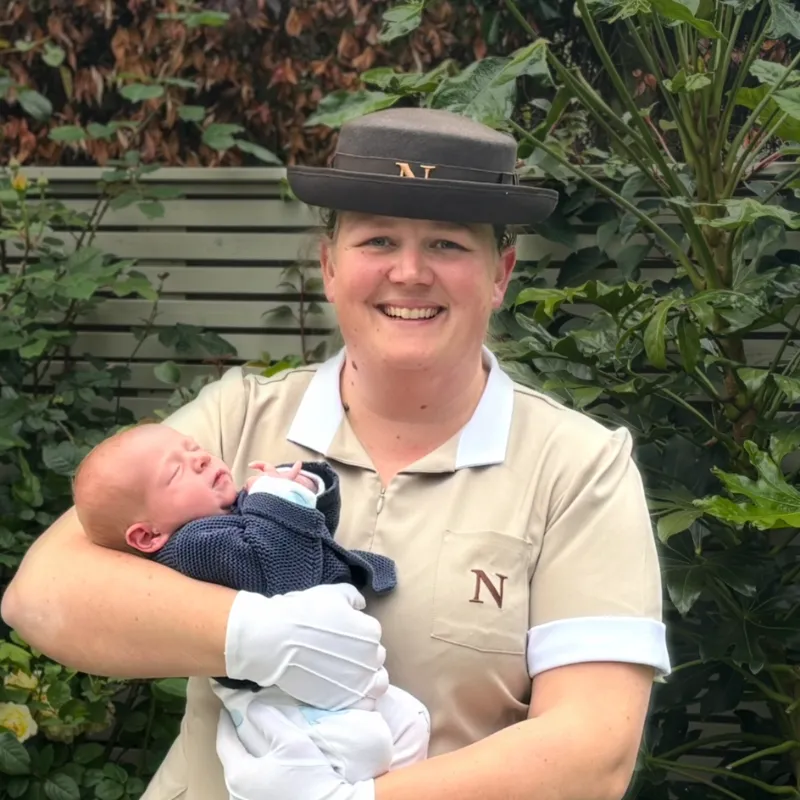
By Melanie, Norland Nanny and Sleep Consultant
There's a moment most sleep-deprived parents know well. It's somewhere between 2am and 4am. You've fed, rocked, shushed, and tried every technique you can remember. And now you're lying in the dark, phone in hand, scrolling.
Maybe you're reading sleep forums. Maybe you're on Instagram at 3am, watching videos of babies who apparently sleep 12 hours from 8 weeks. And increasingly, you're opening a sleep tracking app, hoping the data will give you the answer that nothing else has.
I completely understand it. Searches for AI baby sleep apps have surged dramatically in 2026, and the technology has genuinely come on. But as someone who has supported hundreds of families through sleep challenges, I want to offer you something the app can't: an honest conversation about what these tools are actually for and what they'll never be able to do.
The Rise of the AI Baby Sleep Tracker
The best AI sleep apps in 2026 are impressive. They pull data from wearable monitors, cross-reference it with developmental databases, and can identify patterns you'd never spot in the fog of new parenthood. Some have even received clinical validation for high-risk infants.
For parents, the appeal is obvious. When you can't think straight, having something to think for you feels like a relief. You get charts. Trends. A number that tells you whether last night was "good" or "needs improvement."
And honestly? That data can be useful. Here's what these apps genuinely do well:
Track sleep patterns across weeks and flag regression windows
Log feeds, naps and night wakings so you don't have to hold everything in your exhausted head
Give you a developmental picture of where your baby's sleep architecture sits
Reduce the mental load of logging, which matters when you're running on empty
I'm not here to dismiss any of that. For some families, a good tracker is a genuinely helpful tool in the mix.
But Data Is Not the Same as Understanding
Here is where I want to gently push back on the trend.
Sleep data tells you what happened. It cannot tell you why. And in baby and toddler sleep, the why is almost always the most important part.
An app cannot tell you that your 7-month-old's sudden night waking is connected to the fact that she's been practising pulling to stand all day and her nervous system is still buzzing with it at midnight.
An app cannot tell you that the reason your 18-month-old is fighting bedtime isn't a "schedule problem" — it's that he's going through a language leap and his brain is processing new words in his sleep.
An app cannot read your family's context. It doesn't know you've tried four different routines in two weeks. It doesn't know you and your partner are on different shifts. It doesn't know that your toddler went through a traumatic bout of illness last month and has been unsettled since.
Data shows you the pattern. A human being helps you understand the story behind it.
The Thing No App Can Give You
I want to talk about something that rarely gets mentioned in the AI parenting tech conversation, because it lives in the subconscious part of being a new parent.
When you're awake at 3am, holding a baby who won't settle, it's not just exhaustion you're dealing with. There's something deeper. A quiet, relentless voice that says: am I doing this wrong? Is something wrong with my baby? Am I failing at the most important job I've ever had?
No sleep tracking app has an answer for that voice.
The dashboard can't tell you: you are doing brilliantly, and this is hard, and you are not broken, and neither is your baby.
It can't offer the specific reassurance that your situation, your baby, your family, your circumstances, is being seen and understood by another human being who genuinely cares.
And it can't give you back the thing that sleep deprivation strips away fastest: trust in yourself.
A Real Example (With Permission)
One of my clients, I'll call her Amy, came to me after six weeks of using a well-known sleep tracking app. She had six weeks of immaculate data. Sleep onset times, wake windows, total overnight hours. Her charts were colour-coded.
She was also barely functioning.
"The app says his sleep should be consolidating by now," she told me in our first call. "So why isn't it? What am I doing wrong?"
Within ten minutes of talking, it was clear that her son was in the middle of a significant gross motor leap. Pulling up, rolling, cruising the furniture, his brain was processing enormous physical development overnight. The fragmented sleep was completely expected and would pass.
The app had no way of knowing any of that. It just saw the wake-ups and flagged them as a problem to be solved.
Three weeks later, he was sleeping through. But the bigger shift, the one that mattered most to Amy was that she stopped believing something was wrong with her. She had someone in her corner who could see the whole picture, not just the data points.
How to Use Sleep Apps Wisely
I'm not suggesting you bin your tracker. If you find it helpful, use it. But here's how to keep it in its proper place:
Use it to spot long-term patterns, not to judge individual nights
Don't compare your baby's data to other babies, developmental timelines vary enormously
If the data is making you more anxious rather than less, put it down for a week
Remember that no data point tells you how to feel about your parenting
The app is a tool. You are the expert on your baby.
When You're Ready for More Than Data
If you've been staring at sleep charts wondering why the numbers don't match how you feel, that gap is telling you something important. Data has limits. Support doesn't.
I work with families to understand the full picture: the developmental stage, the family context, the routines, and crucially, what you actually want your days and nights to look like. Not what an algorithm says they should look like.
If you'd like to talk through where you are right now, I offer a free 20 minute call for parents who aren't sure where to start. No data required. Just you and whatever is keeping you up at night.

