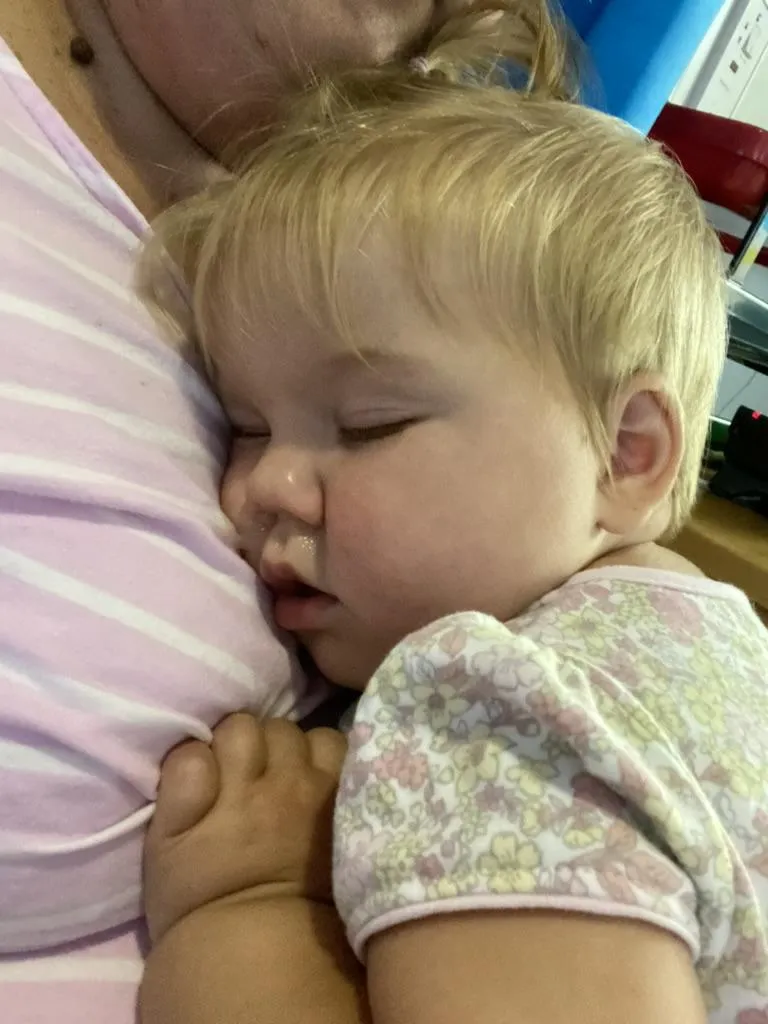
White Noise for Baby Sleep: A Practical Guide from a Norland Nanny
White Noise, Done Well: A Practical Guide from Newborn to Toddler
If I had a pound for every time a parent asked me about white noise, I could probably retire to a very quiet cottage somewhere (which, as you'll read, would be lovely for me but catastrophic for most babies). It is, without question, one of the most talked-about, most misunderstood, and most useful tools in a sleep consultant's kit.
After eighteen years of working with families, from brand new babies in the fourth trimester through to tall, opinionated three-year-olds, I've seen white noise help enormously when it's used well, and quietly stop working when it isn't. So rather than writing another post asking "should you use it", I want to give you the practical version. How to choose it, how loud, where to put it, when to turn it on, when to turn it off, and what to do if you want to wean your child off it down the line.
A quick note on why it works
I'll keep this brief because this is a how-to, not a lecture. The womb is not a quiet place. It's somewhere between a running shower and a hoover in the next room, all day and all night, for nine months. When your baby arrives earth-side into a silent nursery, that silence can feel jarring rather than peaceful. White noise recreates something familiar, masks the startle of the bin lorry or a sibling thundering up the stairs, and gives the brain a consistent cue that says "this is where sleep happens".
It isn't a magic switch. It's an environmental support, the same way blackout blinds or a good sleeping bag are. Used thoughtfully, it makes everything else you're doing work a little better.
Choosing a machine
You do not need the most expensive option on the market. What you do need is:
A continuous sound, not a looped track. Cheap apps and some older machines play a thirty-second loop that resets with a tiny click, and babies notice. Look for "continuous" or "seamless" in the description.
A true white or pink noise setting. Pink noise is slightly deeper and many adults find it easier on the ear, but both work well. I'd skip the "womb sounds", "heartbeat", "ocean waves" options for long-term sleep use, as they tend to be more rhythmic and can become associations in themselves. Save those for soothing a fussy newborn in your arms.
Mains or long battery life. If it cuts out at 2am, so does the sleep.
No light, or a light that can be fully switched off. A glowing blue screen in the cot at midnight is not what we want.
I don't tie myself to one brand. I've used plug-in machines, portable travel ones, and the larger nursery models. All of them do the job if they tick the boxes above.
How loud is too loud?
This is the bit I want you to take away if you read nothing else.
The common guideline, based on paediatric audiology research, is to keep white noise no louder than around 50 decibels at the baby's ear. For reference, that's roughly the level of a quiet conversation or light rainfall. A good rule of thumb I give parents: if you stand where the baby sleeps and the noise is louder than your own speaking voice at a normal volume, it's too loud.
You can download a free decibel meter app on your phone and check it in ten seconds. It is genuinely worth doing, because the instinct when a baby is crying is to turn it up, and up, and up. The machine ends up closer to a hairdryer than a shower, and that's where we run into trouble with little ears.
Louder is not more soothing. Consistency is soothing.
Where to put it
Not in the cot. Not clipped to the cot. Not tucked under the mattress.
I place white noise machines across the room from where the baby sleeps, ideally a couple of metres away, at a similar height to the cot or bed. The aim is an even, ambient sound filling the room, not a targeted blast at the baby's head. If you're using it to mask a specific disturbance, say a noisy hallway or a road-facing window, put the machine between the baby and the source of the noise.
For toddlers who've moved to a bed, the same principle applies. Across the room, up off the floor, plugged in and forgotten about.
Norland Nanny and Infant Sleep Specialist Tip: I always recommend running your white noise for the whole sleep, not just at the start. Babies and toddlers cycle through light sleep every 45 to 60 minutes, and that's the moment a creaky floorboard or a door closing downstairs can wake them. The white noise smooths those transitions so they resettle without you.
When to switch it on, and when to switch it off
On, about five to ten minutes before you start the sleep routine, so the room is already set by the time you walk in with your baby. Off, when they wake for the day or at the end of the nap.
Don't use it during awake, alert time in the nursery. Part of the reason it works is that it becomes a specific cue for sleep. If it's the soundtrack to nappy changes, play, and feeds as well, it stops being a signal and just becomes wallpaper.
"Won't they become dependent on it?"
This is the question I get most, and my answer is always the same. Yes, in the sense that they'll come to associate it with sleep, which is exactly what we want. No, in the sense that they'll be unable to sleep without it forever. Babies and children are extraordinarily adaptable, and sleep is not fragile. A week in a hotel, a nap at grandma's, a nursery room without a machine, none of this will undo your child's ability to sleep.
If you want the reassurance, travel with a small portable machine or use a free app on an old phone when you're away from home. That's what I do with my families, and it means holidays and overnights don't become a negotiation.
Weaning off, if and when you want to
There's no rule that says you have to. Plenty of adults sleep with a fan or an air purifier for exactly the same reasons, and nobody writes worried posts about them.
But if you'd like to phase it out, perhaps because your child is starting school and will sleep over at friends' houses, here's what I do. Gradually lower the volume over the course of ten to fourteen days, a tiny notch each few nights. Once it's barely audible, leave it on that low setting for another week or so, and then stop using it altogether. Most children don't notice. The ones who do tend to ask for it back for a night or two, and then forget about it entirely.
A final thought
White noise isn't a shortcut and it isn't a crutch. It's a simple, well-evidenced tool that, used at the right volume, in the right place, at the right moments, gives your baby or toddler one more reason to settle and stay settled. That's all we're ever really doing with sleep, layering up the small, boring, consistent things until sleep becomes the easiest option in the room.
If you're in the thick of it and none of the "small, boring, consistent things" seem to be adding up yet, that's exactly the work I do with families day in and day out. I offer bespoke consultations tailored to your specific baby, your specific home, and your specific version of tiredness. Find out more at www.melaniehastings.sleepnanny.co.uk.

